



Metal Surface Finishing Methods
- What Is Metal Surface Finishing?
Metal surface finishing refers to a series of processes used to improve the appearance, performance, and durability of metal products.
These processes are widely used in industries such as:
- Automotive manufacturing
- Sanitary ware
- Hardware products
- Machinery parts
Surface finishing not only enhances product aesthetics but also improves corrosion resistance, wear resistance, and functionality.
- Common Metal Surface Finishing Methods
- Polishing
Polishing is used to create a smooth and shiny surface by removing fine irregularities.
Features:
- High surface brightness
- Improved product appearance
- Suitable for decorative parts
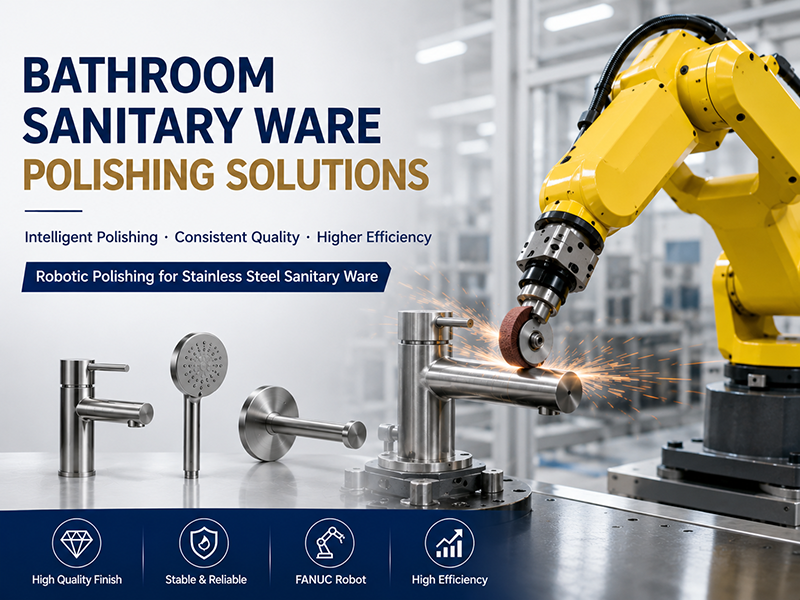
Today, many manufacturers use polishing robots for better consistency and efficiency.
- Grinding
Grinding removes material using abrasive tools to achieve desired dimensions and surface quality.
Features:
- High precision
- Suitable for rough finishing
- Improves flatness
Grinding is often used before polishing as a pre-processing step.
- Deburring
Deburring removes sharp edges and burrs generated during machining or casting.
Features:
- Improves safety
- Enhances assembly quality
- Essential for precision parts
Robotic deburring systems are increasingly used in automated production lines.
- Sandblasting
Sandblasting uses high-speed abrasive particles to clean or texture metal surfaces.
Features:
- Uniform matte finish
- Removes rust and contaminants
- Improves coating adhesion
- Electroplating
Electroplating deposits a metal coating onto the surface to enhance corrosion resistance and appearance.
Features:
- Corrosion resistance
- Decorative finish
- Extended product life
- Powder Coating
Powder coating applies a dry powder layer that is cured to form a protective coating.
Features:
- Durable coating
- Eco-friendly
- Wide color options
- How to Choose the Right Finishing Method
Choosing the right finishing process depends on several factors:
- Product application
- Surface quality requirements
- Production volume
- Cost considerations
For example:
- High-end decorative products → Polishing
- Precision components → Grinding + Deburring
- Outdoor products → Coating or plating
- Automation Trends in Surface Finishing
With the development of smart manufacturing, more companies are adopting:
- Robotic polishing systems
- Automated grinding machines
- Integrated finishing production lines
Automation helps manufacturers achieve:
- Higher efficiency
- Consistent quality
- Lower labor costs
- Conclusion
Metal surface finishing plays a crucial role in modern manufacturing by improving product quality, durability, and appearance.
From polishing and grinding to coating and plating, each method serves a specific purpose.
As automation continues to evolve, advanced solutions like robotic polishing and grinding systems will become the future of surface finishing.